In California, housing affordability is still squeezing everyday families. More than 3 million renter households pay over 30 percent of their income toward rent, and more than 1.5 million pay over 50 percent, which is a reminder that small, practical housing additions matter.
An ADU can be one of the most direct ways to add livable space, create flexibility for family, and potentially build a long-term rental income stream, but only if the financing plan fits your timeline and risk tolerance.
This guide breaks down the most common ways Los Angeles homeowners finance ADUs in 2026, what lenders typically want to see, and how to avoid the budget traps that turn a good project into a stressful one.
Along the way, you will find links to authoritative resources like LADBS ADU guidance and the California HCD ADU resource hub so you can verify requirements as you plan.
How ADU Financing Works in Los Angeles
Most ADU financing decisions come down to one question: Are you borrowing against equity, borrowing against the future value of the improved property, or borrowing unsecured based on income and credit? The right answer depends on how “permit ready” your project is and how predictable you need your monthly payment to be.
A typical LA ADU funding path looks like this:
- Pre development: design, surveys, engineering, energy documents, and permit fees
- Permit and plan check: submissions, corrections, approvals
- Construction: site work, foundation or conversion work, MEP (mechanical, electrical, plumbing), finishes
- Inspections and sign off: finals and certificate of occupancy
- Move in or rent up: furnishing, leasing, property management setup
Loans that “draw” funds during construction usually require a clearer scope, contractor documentation, and inspection checkpoints. Equity based options like HELOCs can be faster, but they shift more budget discipline onto you.
If you are still validating feasibility, start with the basics:
- Confirm your ADU type and local standards using LADBS and HCD.
- Learn the state level processing rule that complete ADU applications are generally reviewed ministerially, often referenced under California Government Code Section 65852.2.
- Decide whether you want speed, the lowest long term cost, the smallest monthly payment, or the least paperwork. You rarely get all four.
What You Need Before You Apply for Any ADU Financing
Before you talk to a lender, you want to show that your ADU is not a vague idea. It is a defined scope with numbers behind it.
Build your “ready to finance” packet:
- ADU budget worksheet that separates hard costs (construction) and soft costs (design, permits, utilities, fees)
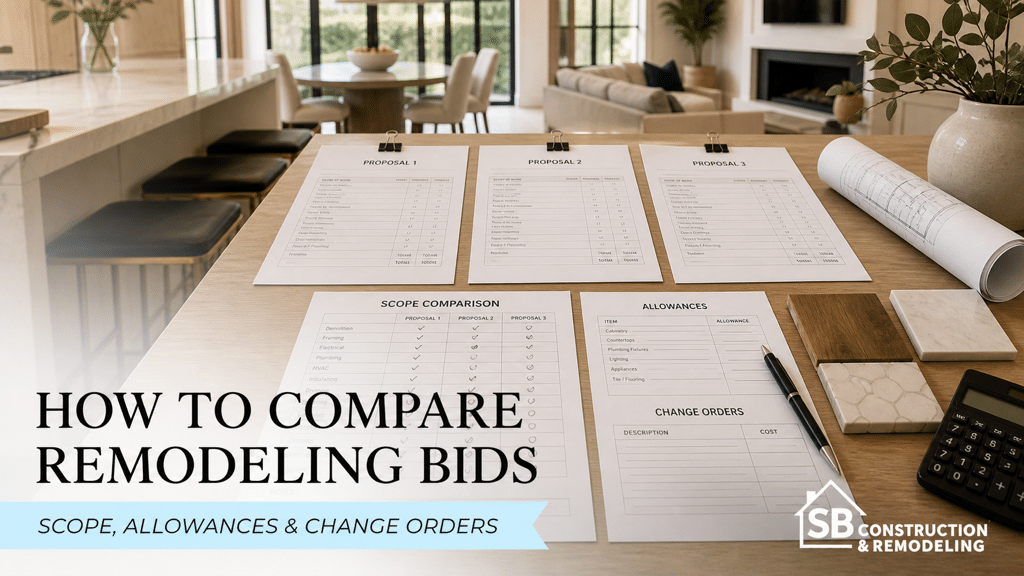
- Contractor bid or design build proposal with a clear scope and allowances
- Preliminary plans and a basic site layout
- Permit strategy (standard plans, full custom, conversion route)
- Contingency (many owners hold a meaningful cushion for surprises)
- Income and debt snapshot for DTI planning
Two practical tips that save real money:
- Lock your finishes early. Change orders kill budgets. If you want to compare materials and get a feel for realistic finish selections, start by browsing the SB Remodeling showroom.
- If you want a fast feasibility conversation before you apply for financing, you can schedule a virtual consultation to map scope, timeline, and budget ranges.
Option 1: Cash and Savings (Fastest, Simplest Route)
Best for: homeowners who want maximum flexibility and minimum lender friction.
Paying cash can be the cleanest option because you avoid loan fees, appraisals, underwriting delays, and draw inspections. It also lets you move faster when permits are issued.
Watch outs:
- Do not drain reserves. ADUs often surface utility upgrades, drainage needs, or structural surprises.
- If cash is tight, consider a hybrid: fund pre development in cash, then finance construction once plans are defined.
Option 2: HELOCs and Home Equity Loans
Best for: owners with strong equity who want flexibility and can manage variable payment risk.
A home equity loan is typically a lump sum with a fixed schedule, while a HELOC is a revolving line you can draw from as needed. A good primer is the CFPB explainer on home equity loans vs HELOCs.
Why people use HELOCs for ADUs:
- You can match draws to your construction timeline.
- You may avoid refinancing an older first mortgage rate.
Watch outs:
- HELOC rates are often variable, so your monthly payment can move.
- Discipline matters. Without a draw schedule, budgets can drift.
Option 3: Cash-Out Refinance for an ADU
Best for: owners who want one monthly payment and can justify replacing their current mortgage terms.
A cash out refinance replaces your existing mortgage with a larger one and gives you the difference in cash. The CFPB has a helpful overview of how cash out refinancing works and what to consider in its consumer research content on cash out refinance mortgages.
Why it can work:
- One loan, one payment, one timeline
- Potentially lower rate than unsecured debt, depending on market conditions
Watch outs:
- If you have a very low existing first mortgage rate, you may be trading a long term advantage for short term cash.
- Costs and qualification standards can be stricter than equity lines.
Option 4: Renovation Loans That Can Cover an ADU
Best for: owners who want to finance improvements based on the future improved value and are comfortable with documentation.
Renovation mortgages can roll renovation costs into a mortgage structure. Common examples include:
- FHA 203(k), outlined by HUD under the 203(k) Rehabilitation Mortgage Insurance Program
- Fannie Mae HomeStyle Renovation, described on Fannie Mae’s HomeStyle Renovation product page
- Freddie Mac renovation options that can support ADU additions, summarized on Freddie Mac’s ADU guidance
Why it can work:
- It can align financing with the “after improved” plan.
- It may allow more structured oversight of funds and contractor work.
Watch outs:
- Paperwork is heavier.
- Contractor eligibility, bid format, and timeline controls can be tighter than with a HELOC.
Option 5: Construction Loans for ADUs
Best for: detached ADUs and larger scopes where you want funds released in controlled stages.
Construction loans are designed for projects where funds are disbursed as work is completed. Many are interest only during construction, with draws tied to inspections or milestones.
Two common structures:
- Construction only, then refinance into a permanent mortgage later
- Construction to permanent, which is explained in Fannie Mae’s overview of construction to permanent financing
Watch outs:
- Delays can cost money if your loan has time limits.
- Incomplete plans often trigger corrections, which can slow funding.
Option 6: ADU-Specific Loan Programs and Private Lenders
Best for: owners who want speed, have unique property situations, or want to cover pre development costs.
Some owners use ADU oriented programs or private lenders for bridge financing, especially when equity is strong but income documentation is complex.
Also, California has supported ADU creation through initiatives like the CalHFA ADU Grant program, which has historically reimbursed eligible pre development costs up to a set cap in participating rounds. Availability changes with funding cycles, so treat it as a “check and confirm” item rather than a guaranteed resource.
Where to start:
- Ask your lender what ADU focused products they currently offer.
- Check current program status before you rely on it.
Option 7: Unsecured Personal Loans (When It Makes Sense and When It Doesn’t)
Best for: smaller conversion scopes or gap funding when you do not want to leverage your home.
Personal loans can help with a limited scope, but they are usually more expensive than secured financing.
When it can make sense:
- You need a small amount to bridge a gap, not fund the full build
- You want speed and minimal paperwork
When it usually does not:
- You are trying to fund a full detached ADU
- The payment would force you to cut corners on scope or quality
Option 8: Builder Financing and Phased Construction
Best for: homeowners who want to spread costs over stages and keep decisions simple.
Some design build contractors structure phased contracts so you can fund design, then permitting, then construction. Even when it is not “financing” in the traditional sense, the goal is the same: align cash flow with milestones.
A practical phased approach:
- Design and feasibility phase
- Permit ready phase
- Build phase
- Finish and turnover
This can help you decide whether to pursue a construction loan later, once the project is clearly defined.
Option 9: Rental Income Strategy: Financing With Future ADU Rent in Mind
Best for: owners who view the ADU as a long term asset, not just extra space.
If your ADU is intended for rental income, financing should match the operating reality:
- Set a conservative rent estimate based on real comps, not best case listings.
- Budget for vacancy, repairs, utilities, and insurance adjustments.
- Consider whether you will self manage or hire management.
A simple planning move that helps lenders and protects you: write a one page “ADU operating plan” with your rent estimate, expenses, and a realistic buffer.
How Lenders Evaluate ADU Projects in 2026
Even when loan products differ, lenders usually look at the same core variables:
- Income and debt to income: can you comfortably carry the new payment
- Equity and collateral: how protected is the lender if values shift
- Project definition: plans, scope, and contractor documentation
- Appraisal logic: comps and how the ADU adds market value
- Permit readiness: a clean plan set reduces time risk
- Reserves: proof you can handle surprises
If you want your financing process to move faster, the best leverage is a clear scope, a credible contractor, and permit readiness.
Financing by ADU Type: Detached, Garage Conversion, and Junior ADUs
Different ADU types often lead to different financing choices:
- Detached ADU: typically higher cost, more site work, more utility coordination. Construction loans or renovation mortgages can be a better match for controlled funding.
- Garage conversion ADU: often a tighter footprint and a shorter path, which can pair well with HELOCs or a smaller construction draw structure.
- JADU: often a smaller interior scope. Many owners fund these with cash, a home equity loan, or modest HELOC draws.
To confirm which type is allowed and what standards apply, review the LADBS ADU overview and cross check the broader state framework via HCD.
Permits and Timing: How Los Angeles Process Affects Financing
Permits are not just a legal step, they are a financing variable. Many construction loan timelines and draw schedules assume you will pass inspections on pace.
Two practical LA planning points:
- Complete applications matter. State law is often referenced to require a timely ministerial decision once an application is complete, and you can read the core statute at Government Code Section 65852.2. In practice, missing items can restart the clock through corrections.
- LADBS tools can help speed plan review. Explore options like the department’s ADU resources and approved plan pathways on the LADBS ADU page.
If your financing requires draws, ask your lender how they handle inspection scheduling and what happens if there are permit corrections or utility delays.
Common Financing Mistakes to Avoid
- Underestimating soft costs like design, permits, engineering, and utility coordination
- Skipping contingency and then funding surprises with high interest debt
- Choosing a loan product based only on the lowest advertised rate, not the rules and fees
- Starting work before permits, which can jeopardize financing and resale value
- Assuming top of market rent will cover the payment without a vacancy buffer
- Locking finishes late and triggering change orders
A Simple Decision Guide: Which Financing Option Fits Your Situation
Use this quick filter:
- You want the fastest path and can keep reserves intact: cash, or cash plus a small HELOC
- You have strong equity and want flexibility: HELOC or home equity loan
- You want one payment and long term simplicity: cash out refinance, if the rate tradeoff makes sense
- You want a structured loan tied to improvements: renovation mortgage options
- You are building a larger detached ADU: construction loan or construction to permanent
- You need speed or have nontraditional income: private lender, with careful cost review
- You only need a small funding gap: personal loan, cautiously
- You want to stage decisions and spending: phased design build approach
If you want help mapping a financing strategy to a real scope, timeline, and permit plan, start by scheduling a virtual consultation.
The Best LA ADU Financing Plan Balances Cost, Speed, and Flexibility
The “best” ADU financing option is the one that matches your timeline, protects your monthly budget, and stays resilient when the project hits real world surprises. Define your scope, price your project honestly, and pick a funding structure that supports the way Los Angeles permitting and inspections actually work. If you want a team to help you plan the build and align it with a clean financing strategy, you can contact SB Remodeling here and start with a clear next step conversation.
Get permit ready, choose the financing structure that fits your risk tolerance, and keep enough buffer so your ADU stays a smart investment, not a stressful one.