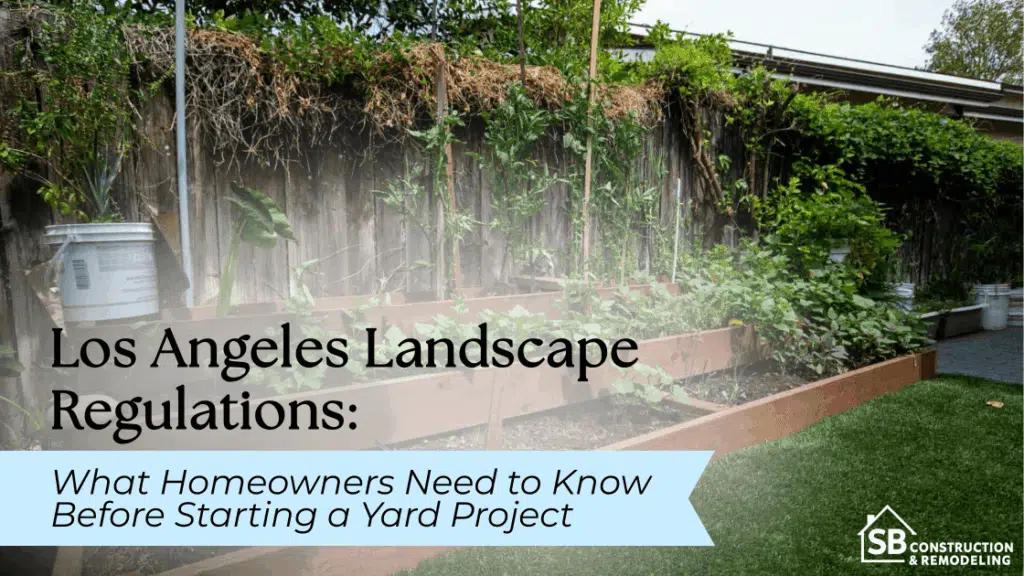
A beautiful yard in Los Angeles is not just a design choice; it is also a compliance project. LADWP reports that over 80 percent of its water supply is imported, which is one reason the City takes outdoor watering and water waste seriously.
This guide breaks down the most common Los Angeles landscaping rules homeowners run into, from water and stormwater to permits, trees, and wildfire safety.
If you want a yard that looks great, avoids costly rework, and stays inspection-friendly, start here.
What “Los Angeles Landscape” Rules Typically Cover
When people say “Los Angeles landscape regulations,” they usually mean a mix of rules from different agencies that touch your yard in different ways. Some apply citywide, some apply only in certain zones (like hillsides or Very High Fire Hazard Severity Zones), and some apply only when your project hits certain size or scope thresholds.
Here are the major categories that typically matter for homeowners:
- Water use and water waste rules: watering schedules, prohibited watering hours, runoff restrictions, and leak repair expectations. See LADWP’s Water Conservation & Ordinance page for current requirements.
- Permits and plan check: even if the “landscaping” is the goal, your project may include structures or earthwork that trigger LADBS permitting. Start with LADBS Building Permits and Express Permits.
- Stormwater and drainage: changes to hardscape, slope, and drainage can trigger Low Impact Development (LID) requirements, especially if you add or replace a meaningful amount of impervious surface. A good primer is LA Sanitation’s LID Best Management Practices Handbook.
- Tree protections: protected species rules can apply even on private property, and certain work near roots or drip lines can be treated like removal. If you have mature native trees, review the City’s Protected Trees Photo Guide.
- Wildfire and ember resistance: vegetation management and defensible space requirements can be stricter in fire hazard areas. See LAFD Brush Clearance Requirements and CAL FIRE’s Defensible Space guidance.
A quick practical note: “Los Angeles” can mean the City, unincorporated LA County, or a neighboring city with its own code. If you are not sure, confirm your jurisdiction before you design around a rule that does not apply to your address.
Landscaping Requirements for Residential Properties
Most routine yard refresh projects (new plants, swapping sprinklers, replacing mulch) do not have a single “landscaping permit.” Instead, compliance is usually about meeting the requirements that attach to water use, drainage, trees, and any construction work that comes with the landscaping.
What you can usually do without triggering a larger compliance process
- Replace plants with similar plants.
- Add mulch and amend soil.
- Repair or replace irrigation components (like heads or a controller), as long as you are not creating a larger permitted “landscape project” tied to plan check.
- Refresh small sections of hardscape that do not change drainage patterns.
What often brings rules to the surface
- Large new hardscape areas (pavers, concrete, turf over soil) that change runoff.
- Hillside work: grading, slopes, drainage, and retaining conditions get more sensitive.
- Tree impacts: digging, trenching, or grade changes near protected trees.
- New structures: patio covers, pergolas, outdoor kitchens, walls, fences, steps, and similar items that are more “construction” than “gardening.”
If your project is connected to a bigger remodel, addition, or new build, you may also run into city landscape ordinance guidelines that address things like tree planting, landscaped area ratios, and buffering. Those are often more common in discretionary approvals and larger projects, but it is still smart to know they exist so your plan does not clash with a requirement later.
Do You Need a Permit for Landscaping in Los Angeles?
A helpful way to think about this is: you may not need a permit to “landscape,” but you may need a permit for what the landscaping includes.
Common yard project items that can trigger permits or plan check
- Grading and significant earth movement (especially in hillside areas).
- Retaining walls and slope stabilization (often tied to grading review).
- New patios, decks, patio covers, and accessory structures.
- Pool or spa work (and related excavation and equipment).
- Changes that affect drainage (downspouts, area drains, new impermeable surfaces).
- Work in the public right of way (parkway planting areas, sidewalks, curb cuts), which can require separate approvals.
Where to start (without wasting time)
- For simpler projects that qualify for online issuance, use PermitLA.
- For projects that require plan check, use ePlanLA.
- If your project involves slope, excavation, or walls tied to grade, read LADBS Grading Permits.
A quick “permit sniff test” before you finalize your design
Ask yourself:
- Am I changing grade or slope anywhere?
- Am I adding hardscape that will send water somewhere new?
- Am I building anything structural (walls, covers, decks, steps)?
- Am I trenching near mature trees or altering soil level around them?
- Am I working in a fire hazard area where clearance rules apply?
If you answered yes to any of these, it is worth doing a permitting reality check early. That is when you can still adjust the design cheaply.
Landscaping Restrictions for Ember Resistance and Fire Safety
In wildfire prone areas, landscaping is part of home hardening. The goal is to reduce ember ignition and slow fire spread, especially closest to the house.
Know which rules may apply to your property
- If your home is in a Very High Fire Hazard Severity Zone, LAFD vegetation management rules can require year round clearance and specific maintenance standards.
- Even outside those zones, CAL FIRE defensible space concepts are a strong best practice for Los Angeles area homeowners.
Practical design choices that improve ember resistance
- Treat the first five feet as a “noncombustible zone”: favor gravel, pavers, or other hardscape, and avoid easily ignitable mulch right against the home.
- Choose low litter, well spaced plants: avoid dense, continuous fuel beds that create a path to the structure.
- Trim and maintain: remove dead material regularly, prune lower branches, and prevent “ladder fuels” where fire can climb from ground cover into shrubs and tree canopies.
- Protect roof and gutters: keep them free of leaves, needles, and other debris, and maintain clearance between overhanging branches and roof surfaces.
- Plan for access: keep pathways and side yards usable so maintenance, inspections, and emergency access are not blocked.
If you are in a brush clearance area, do not wait for the notice. Build your landscape in a way that is easier to keep compliant year round.
Understanding “Landscaped Area” and How It’s Measured
Homeowners often get tripped up by “landscaped area” because it sounds like “my whole yard.” In water efficiency rules, it is more specific.
In California’s Model Water Efficient Landscape Ordinance (MWELO), “landscape area” generally means the parts of your project that are irrigated planting areas, turf areas, and water features. It specifically excludes things like buildings, driveways, patios, decks, and other hardscape.
When measurement starts to matter
- If your landscaping is part of a permitted project (new construction or certain major landscape work), your plans may need to show total landscape area and other details for compliance review.
- LADBS publishes MWELO related plan check guidance that references landscape area thresholds and documentation requirements.
Why it matters for homeowners
Accurate area measurement affects:
- Whether a project triggers landscape documentation or plan review requirements.
- Your irrigation approach, hydrozoning, and plant selection.
- How you balance turf, planting beds, and water features without creating an over-watered, runoff prone yard.
A practical tip: measure early and keep a simple area schedule (turf, planting beds, hardscape, water features). Even if you never submit it, the exercise makes design decisions cleaner and helps your contractor price more accurately.
Common Landscaping Compliance Mistakes Homeowners Make
Most compliance issues are not dramatic. They are simple oversights that become expensive because they are discovered late.
Here are common pitfalls to avoid:
- Watering that creates runoff onto sidewalks, driveways, gutters, or the street.
- Ignoring watering hour restrictions, especially during hot months when evaporation is highest.
- Adding hardscape without a drainage plan, which can send water toward foundations or neighboring lots.
- Starting grading or wall work without confirming LADBS requirements, particularly in hillside conditions.
- Accidentally harming protected trees by trenching through roots, raising or lowering grade in the drip line, or compacting soil around trunks.
- Over planting close to the home in fire areas, creating ember catch zones right where you want the most protection.
- Forgetting the parkway: changes between sidewalk and curb often have separate rules and approvals.
The easiest way to prevent these issues is to design for compliance, not design first and “figure out permits later.”
Planning a Compliant Landscape Project From the Start
A regulation-friendly yard project starts with a short planning sequence. You do not need a full architecture set to do this. You just need clarity.
Step 1: Confirm your jurisdiction and property conditions
- Are you in the City of Los Angeles, unincorporated LA County, or another city?
- Are you in a hillside area or a Very High Fire Hazard Severity Zone?
- Do you have mature trees that may be protected?
Step 2: Map what you are changing
Create a simple sketch of:
- Existing and proposed hardscape
- Planting areas
- Drainage paths (where water flows today, and where it will flow after)
- Any walls, steps, or structures
Step 3: Build the water plan into the design
- Group plants by water needs (hydrozones).
- Use efficient irrigation (drip where it makes sense).
- Choose plants using credible water use references like WUCOLS.
- Design to prevent overspray and runoff.
Step 4: If you are adding hardscape, plan for stormwater
- Favor permeable options where appropriate.
- Consider rain capture or infiltration solutions that fit your site.
- Do not create an unintended “water funnel” toward your home.
Step 5: Do a permitting reality check before final selections
Use LADBS resources to confirm whether your plan includes any permit triggers, then adjust the design before you lock in materials and layout.
Hiring the Right Contractor for a Regulation-Friendly Landscape Build
A good contractor does more than build the yard. They help you avoid design decisions that create inspection issues, neighbor disputes, or rework.
When you are vetting a contractor, ask:
- Who pulls permits if they are needed, and how do they confirm which permits apply?
- How will you handle drainage so water does not run off site?
- What is your approach if there are mature trees or protected species on the property?
- If the property is in a fire hazard zone, how do you design for defensible space and ember resistance?
If your yard project ties into a bigger remodel, it can help to work with a team that understands the full “design and build” picture. SB Remodeling is a Los Angeles based remodeling firm that regularly coordinates trades, plans, and inspections for residential projects, including backyard and outdoor living upgrades. If you want inspiration for finishes and materials that can pair well with an outdoor refresh, you can also explore the SB Showroom.
Ready to talk through your yard plan before you start spending on demolition or materials? You can schedule a virtual consultation to pressure test scope, permitting risk, and a sensible build sequence. Or, if you already have drawings or photos, use SB’s contact page to start the conversation.
Build a Los Angeles Landscape That Looks Great and Passes Requirements
A successful Los Angeles landscape project is equal parts design, water discipline, and smart planning. If you confirm your jurisdiction, respect watering and runoff rules, treat drainage like a first class design element, and plan early for trees and fire safety, you will avoid the most common compliance headaches. The payoff is a yard that looks intentional, performs well year round, and does not create problems when it is time for inspections, resale, or the next phase of your home upgrades.