Homeowners are still investing heavily in renovation, with national homeowner improvement and repair spending projected to reach record levels in 2026.
That makes one thing especially important in Los Angeles: getting the permit path right before demolition, deliveries, and trade scheduling begin.
This guide walks you through how LA remodeling permits and timelines usually work in 2026, where projects are likely to be delayed, and what to do early to keep your remodel moving with fewer surprises.
At SB Remodeling, we believe the best projects start with clear planning, realistic expectations, and current guidance grounded in the latest city and code requirements.
Start Here: Why LA Permits Matter and What Usually Triggers One
In the City of Los Angeles, permits are not just paperwork. They are how the city verifies that construction, alteration, repair, and system changes meet current safety, building, and zoning requirements. For many homeowners, the confusion starts because a remodel may feel cosmetic while still involving regulated work behind the walls.
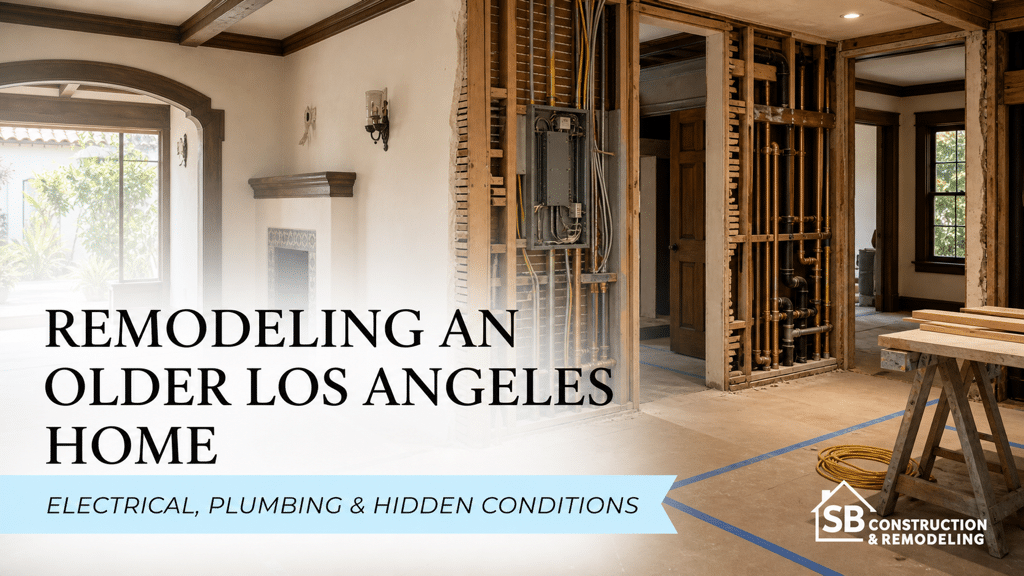
A permit question usually comes up when your project touches structure, electrical, plumbing, HVAC, windows, roofing, or layout changes. Even if you are not adding square footage, a kitchen or bathroom remodel can still require building and trade permits depending on what is being replaced, relocated, or upgraded. The safest first step is to define the actual work, not just the room name.
Step 1: Define Your Scope so You Pick the Right Permit Path
The timeline usually depends less on whether you call it a “remodel” and more on what the scope includes. A straightforward refresh may move through a lighter process, while structural or systems-heavy work will almost always trigger fuller review.
A clear scope should answer:
- Are walls being removed, added, or reframed?
- Are plumbing fixtures staying in place or moving?
- Is electrical being upgraded, rewired, or expanded?
- Is HVAC equipment, ducting, or ventilation changing?
- Are windows or doors being replaced in-kind or altered in size?
This is where early planning pays off. If you want help mapping scope, budget, and city process before drawings begin, schedule a virtual consultation. For homeowners also comparing detached-unit work, our Pasadena ADU building guide is a useful companion resource.
Step 2: Express Permit vs Plan Check: The Two Main Timelines
Los Angeles generally gives homeowners two broad paths. The faster path is the Express Permit or e-permit route for qualifying smaller projects that do not require plan check. The longer path is plan check, where plans are reviewed before permit issuance.
Projects often associated with the express route include same-size window and door replacement, certain re-roofing work, many kitchen and bathroom remodels, fixture replacement, and some outlet rewiring. Once your scope goes beyond that and into structural work, more involved system changes, or other conditions requiring drawings and review, expect plan check rather than instant issuance.
That difference is the real timeline divider. Express permits are the quick lane. Plan check projects move in cycles.
Step 3: Plan Set Prep That Prevents Rejections and Re-Checks
The cleanest way to shorten a permit timeline is to improve the submittal before it ever reaches review. In Los Angeles, incomplete plans do not move faster just because they were uploaded faster.
For many remodels, the plan set should align existing conditions with proposed work and clearly show dimensions, fixture locations, notes, and any code-driven upgrades. If structural changes are involved, structural sheets may be required. If the project triggers energy compliance, the drawings and supporting documents should match the applicable California Energy Commission requirements from the start.
A strong permit set is coordinated, legible, and consistent. That means fewer correction rounds and fewer avoidable emails after submittal.
Step 4: Online Submittal in 2026: ePlanLA and Account Setup
In 2026, Los Angeles homeowners and contractors are typically dealing with online systems first. ePlanLA is the city’s electronic plan review platform, and access runs through the Angeleno Account. If your project requires plan check, this is where organization starts to matter.
Before uploading, make sure the account owner, applicant information, and file naming are all settled. A messy first upload can create confusion later when comments come back, invoices are issued, or multiple reviewers need revised sheets. It also helps to decide in advance who will monitor corrections and respond, because city comments move better when one party owns the response.
Step 5: Plan Check Cycles: Comments, Corrections, and Resubmittals
Many homeowners underestimate this stage. Plan check is rarely one clean upload followed by approval. More often, it is a sequence: review, comments, corrections, resubmittal, then follow-up review until the plans are acceptable.
That is why fast responses matter. If comments sit unanswered, your job effectively pauses before it starts. The better approach is to treat corrections like active project management, not admin cleanup. Review every comment carefully, revise the plans in a coordinated way, and resubmit complete answers rather than partial fixes.
When the responses are organized, the review team can move with you. When they are fragmented, the clock stretches.
Step 6: Permit Issuance and Fees: What Happens Right Before You Can Start
Getting approved is not the same as being cleared to build. After plans and clearances are complete, the project moves into permit issuance. This is the point where final paperwork, responsible party information, and payment all have to line up.
Los Angeles provides a permit fee calculator and fee schedules to help applicants estimate costs. For some electronically reviewed projects, the city also uses an online Ready to Issue process. The practical takeaway is simple: approval gets you close, but issuance is the true green light. No permit in hand means no legal start.
Step 7: Pre-Construction Timeline (The Part Homeowners Underestimate)
The city timeline is only one part of the pre-construction schedule. Homeowners often lose more time on selections, revisions, pricing updates, and trade coordination than they do on one isolated plan review comment.
Before construction starts, you should typically lock in:
- finish selections with enough lead time
- appliance and fixture specifications
- any long-lead materials
- subcontractor sequencing
- site logistics and protection plan
This is also the right time to align the permit strategy with the financial plan. If your project budget includes an ADU or broader property improvements, our guide to Los Angeles ADU financing options in 2026 can help you think through funding before the job mobilizes.
Trade Permits You Might Need Even for “Simple” Remodels
One of the biggest misconceptions in LA remodeling is that a light interior remodel only needs one permit, or no permit at all. In reality, trade permits often follow the work being performed.
Electrical permits are generally required for electrical work. Plumbing permits can be required for gas piping, water piping, drainage, or fixture-related modifications. Mechanical permits can apply when heating, cooling, ventilation, or venting systems are being installed or modified. So even a “simple” kitchen remodel can become a building-plus-trade permit job once the scope is fully defined.
That is why scope clarity at the beginning saves time later.
Inspections: What Gets Checked and When (So Your Schedule Doesn’t Slip)
Once permits are issued, inspections become the next timeline gate. Los Angeles requires inspection before covered work is concealed, and work generally progresses in sequence. Depending on scope, inspections may involve framing, rough electrical, rough plumbing, mechanical work, and final approval.
The important scheduling mindset is this: do not plan your next trade assuming approval before inspection is actually signed off. A missed rough inspection, blocked access, or incomplete correction can ripple through the rest of the schedule. Building intelligently means pacing the work around approval points, not around best-case assumptions.
What Slows LA Permits Down Most (And How to Avoid It)
Most delays are not mysterious. They usually come from incomplete submittals, unclear drawings, late responses to corrections, scope changes after filing, or missed planning issues tied to the property itself.
Problems also arise when homeowners learn too late that the parcel has extra zoning or review conditions. Before going too far, check the property in ZIMAS to review zoning information, planning records, and permit history. If the site carries overlays or special conditions, that can affect the path long before construction starts.
In other words, permit delays are often planning delays in disguise.
Fastest Ways to Keep Your Permit Moving
Speed in LA usually comes from preparation, not luck. The most reliable ways to keep a permit moving are surprisingly basic:
- submit a complete, coordinated plan package
- answer correction comments quickly and fully
- avoid redesigning the project mid-review
- confirm property conditions early through ZIMAS and planning records
- work with a contractor who understands LA permitting workflows
For many homeowners, this is where the right builder matters as much as the right design. If you want project-specific guidance before you file, contact SB Remodeling.
Homeowner vs Contractor Permits: Who Should Pull What
Los Angeles allows different parties to participate in the permit process, including homeowners and licensed contractors. But who pulls the permit affects paperwork, responsibility, and how smoothly the process tends to run.
A homeowner may proceed as an owner-builder in some situations, but that comes with direct responsibility and additional declarations. A licensed contractor, by contrast, typically handles permit logistics as part of project delivery. In practice, homeowners should think beyond who can pull the permit and ask who is best positioned to manage corrections, issuance, inspections, and trade sequencing without gaps.
The cheapest path on paper is not always the cleanest path in execution.
Special Cases: When Extra Review Is Likely
Some properties carry another layer of review that can extend the process. That can happen in hillside areas, certain coastal locations, or historically sensitive areas. It can also happen when City Planning clearances are required in addition to LADBS review.
If the home is in a local historic district, exterior work may require additional planning review through the HPOZ process. If the property has historic status or eligibility, it is worth checking both HistoricPlacesLA and the city’s historic preservation tools early. And for eligible projects, Los Angeles City Planning’s Universal Planning Review Service now adds a more centralized zoning review framework in 2026.
These are exactly the issues that should be discovered before the permit upload, not after.
Final Sign-Off: What “Approved to Start” Really Means
A homeowner should think of “approved to start” as a three-part checkpoint: the plans have been approved, the permit has been issued, and the job is ready to proceed under posted permit conditions and required inspections. It does not simply mean someone said the remodel looks fine.
From there, the project still has to pass required inspections and close out properly. On some jobs, final inspection is the last administrative step. On others, final documentation and occupancy-related closeout may matter more. Either way, the goal is not just to start legally, but to finish cleanly.
Short Takeaway
Los Angeles home remodeling permits in 2026 are manageable when the project is defined early, the property is screened for special conditions, and the submittal is built to pass review instead of just reach review. The fastest projects are usually the ones that begin with a realistic scope, coordinated plans, and a contractor who understands how LADBS, City Planning, and inspections fit together. If you are planning a remodel and want clarity before the permit process begins, reach out here.