One year after the Palisades and Eaton fires destroyed more than 16,000 structures across Southern California, many Los Angeles homeowners are asking a more practical question: what actually makes a house harder to ignite?
The answer is not a single miracle product. It is a layered strategy that accounts for how homes really burn, especially from embers, small flames near the structure, and weak points in the exterior envelope. This guide walks through the upgrades that matter most, where Los Angeles permitting often comes into play, and how to plan improvements that reduce risk without pretending any home can ever be truly fireproof.
Start Here: What “Fire-Resistant” Really Means in LA
In wildfire country, “fire-resistant” does not mean invincible. It means your home is less likely to ignite when exposed to embers, radiant heat, or nearby flame contact. In practice, that usually comes down to two connected strategies: hardening the house itself and reducing the fuels immediately around it.
Before choosing materials, start by checking where your property sits. The Office of the State Fire Marshal Fire Hazard Severity Zone maps and the LAFD Fire Zone Map are the best first stop for Los Angeles homeowners. If your home is in a High or Very High Fire Hazard Severity Zone, the code and review path for exterior work can change, especially if you are doing additions, major alterations, or a full exterior rebuild.
This is also where many homeowners benefit from professional scoping early, before they spend money in the wrong order. If you want help turning wildfire concerns into a practical renovation plan, you can schedule a virtual consultation and map out what should happen first, what can be phased, and what may trigger review.
The right mindset is simple: protect the roofline, protect openings, protect the first few feet around the home, and remove the easy ignition points that let a small ember problem become a full structural fire.
Prioritize the Exterior Envelope First
If the budget cannot cover everything at once, start with the parts of the home that most often fail first.
Roofing, edges, and gutters
A roof is still one of the highest-impact upgrades because it is a large landing zone for embers. In Los Angeles, that means focusing on a Class A roof assembly, clean roof surfaces, sealed roof gaps, and edge details that do not let debris collect and smolder. If the roof is aging, has exposed gaps, or lets leaves collect at transitions and penetrations, it deserves attention before lower-priority cosmetic work.
Gutters matter more than many homeowners realize. Debris-filled gutters can act like kindling when embers land, which is why metal gutters, noncombustible gutter covers, and good drip-edge detailing are such useful upgrades. Even if you are not replacing the entire roof, a gutter and roof-edge cleanup strategy can materially reduce vulnerability.
Vents and eaves
Vents are one of the most important home-hardening upgrades because they are literal openings into the building. Ember-resistant vents, or code-compliant vent protection using noncombustible metal mesh where appropriate, can reduce one of the most common entry points for ignition. If you are replacing vents, it is also smart to verify products through the State Fire Marshal’s WUI products listings.
Eaves deserve similar attention. Open eaves, gaps in blocking, and combustible materials directly below the overhang can all create easy pathways for ember entry or flame spread. Boxed-in soffits and noncombustible enclosure materials are often worth prioritizing, especially on older homes.
Siding, windows, doors, and garage doors
For exterior walls, the goal is not just choosing a “better” finish, but choosing one that gives fire fewer opportunities to spread. Stucco and fiber cement are popular for a reason. They are durable, familiar in Los Angeles construction, and far less vulnerable than untreated combustible cladding. On many remodels, even a partial upgrade at the most exposed locations can improve performance, particularly near grade, deck intersections, and roof-to-wall transitions.
Windows are another major weak point, especially older single-pane units. Dual-pane windows with tempered glass offer better resistance under wildfire exposure, and that matters even more on elevations facing vegetation, slopes, or neighboring structures. Frames and seals matter too. A great glass package can still underperform if the surrounding assembly is weak.
Do not overlook exterior doors and garage doors. Ember intrusion often happens through thresholds, side gaps, and poorly sealed garage door perimeters. Weather-stripping, better gasketing, metal mesh on screen assemblies, and flashing at vulnerable joints are relatively modest upgrades that can close off easy entry points.
A smart priority list usually looks like this:
- Class A roofing and roof-edge detailing
- Ember-resistant vents
- Enclosed or boxed eaves
- Noncombustible or ignition-resistant siding in exposed areas
- Dual-pane tempered windows
- Better sealing at doors and garage openings
Do Not Ignore the Ground-Level Pathways to Ignition
A hardened roof will not do enough if the area around the home still invites ignition.
Decks, fences, patio covers, and attachments
Attached features can act like flame bridges. A combustible deck, a wood fence tied directly into the wall, or a patio cover with vulnerable materials can carry fire right back to the structure. That is why deck-to-wall intersections, under-deck storage, and fence-to-house transitions deserve close attention.
For decks, focus on ignition-resistant or noncombustible walking surfaces where feasible, remove anything flammable underneath, and keep the area around the footprint free of ember-catching clutter. For fences, it is wise to switch to a noncombustible section where the fence meets the house. Patio covers should be evaluated the same way a roof edge is evaluated, with attention to materials, debris collection, and connections back to the home.
Zone 0, Zone 1, and Zone 2
This is where landscaping stops being decorative and starts being part of your fire strategy.
- Zone 0 is the first 0 to 5 feet from the house. This is the most important area for ember resistance. Think gravel, pavers, concrete, and a clean foundation perimeter instead of bark mulch, stored combustibles, or dense plantings.
- Zone 1 generally extends from 5 to 30 feet. The goal here is lean, well-spaced, well-maintained vegetation that does not create an easy path to the structure.
- Zone 2 extends farther out, up to 100 feet where applicable. This zone is about reducing fire intensity and breaking up fuel continuity.
One important point: homeowners should not assume a plant is “fireproof” just because it is marketed as drought tolerant or fire-wise. Placement, spacing, irrigation, pruning, and maintenance often matter more than plant labels. The Ready for Wildfire landscaping guidance is especially useful here because it focuses on plant traits, spacing, and upkeep rather than oversimplified promises.
For most Los Angeles homes, the immediate wins are removing mulch and dead material near the house, keeping shrubs off walls and windows, maintaining separation between planting masses, and making sure irrigation supports plant health without creating other building problems.
Permits, Budget, and Choosing the Right Contractor in Los Angeles
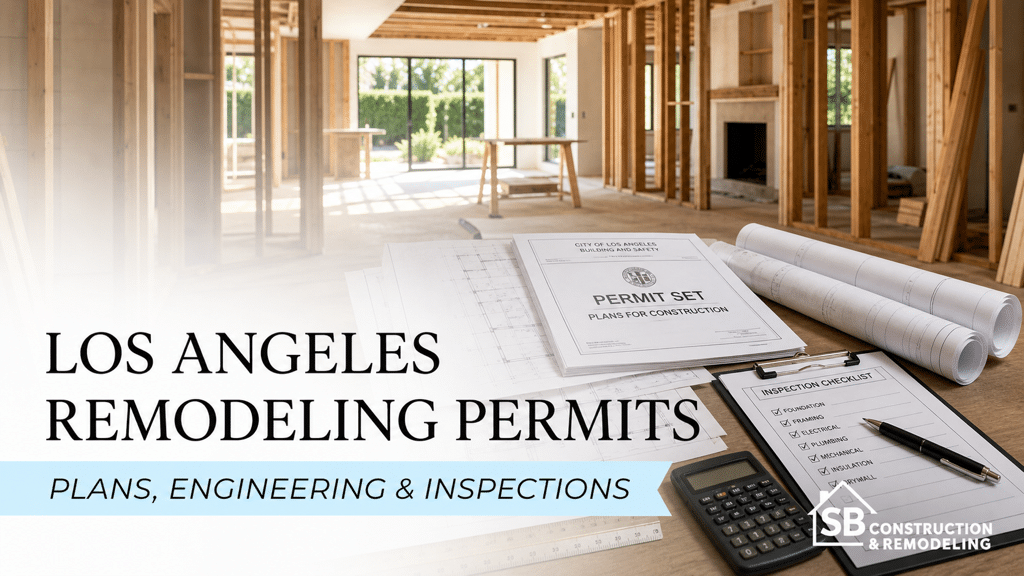
Exterior wildfire upgrades often seem simple until permit scope enters the picture. In the City of Los Angeles, LADBS permit information should be part of planning from day one. Some same-size window and door replacements, certain re-roofing work, and select siding work may fall into simpler permit pathways, while larger alterations, reconfiguration, or work in higher-hazard areas can trigger added review.
That matters because timing and cost are driven by scope more than almost anything else. The biggest budget movers are usually:
- how much of the roof or exterior is actually being replaced
- roof complexity, slope, and access
- number and size of windows and doors
- how much trim, flashing, and carpentry correction is needed
- whether decks, fencing, and hardscape are bundled into the same phase
- whether the property location triggers additional fire-zone review
This is also why contractor selection matters. You do not just want someone who can install products. You want someone who can connect the dots between roofing, siding, glazing, venting, flashing, and site work so the finished system performs as a whole.
When comparing bids, ask whether the scope clearly addresses vents, eaves, transitions, deck intersections, garage gaps, and the first five feet around the structure. If those details are missing, the proposal may look cheaper while leaving the most important vulnerabilities behind.
And if your wildfire upgrades are part of a broader long-term property plan, it can help to think through financing and sequencing early. Homeowners who are weighing larger improvement decisions can also review SB Remodeling’s Los Angeles ADU financing options and Pasadena ADU building guide to understand how exterior resilience work can fit into bigger renovation and equity-planning conversations.
Takeaway
The most effective fire-resistant upgrades in Los Angeles usually are not the flashiest ones. They are the upgrades that shut down ember entry, reduce fuel right next to the house, and strengthen the assemblies that fail first under wildfire exposure. If you want help building that scope in a practical order, contact SB Remodeling or schedule a virtual consultation to turn general wildfire advice into a project plan that fits your home, your budget, and your permitting path.