You may be able to live at home during a remodel when you can keep a safe, separate living area with reliable bathroom access, essential utilities, and a usable exit. If construction takes those basics away—or creates dust, noise, or access problems your household cannot reasonably manage—temporary housing may be the better plan. Decide before demolition, then revisit the decision when the actual scope becomes clear.
The important question is not simply whether the project is a kitchen remodel or a whole-home renovation. It is what your household will be able to use on each working day. Here is how to turn that question into a practical occupancy plan.
Start with a room-by-room reality check
Walk through the proposed work with your contractor and identify the rooms that will remain usable, the routes workers will take, and the systems that may be interrupted. A bedroom outside the construction zone is not enough if reaching the bathroom means crossing demolition debris or if electrical work affects the entire house.
- Bathroom: Will at least one toilet, sink, and bathing option remain available? Confirm when plumbing tie-ins could interrupt them.
- Food: Where will you store food, wash dishes, and prepare meals? A temporary setup must be appropriate for the appliances and electrical supply it uses.
- Access: Can everyone enter, leave, and reach essential rooms without passing through the work area?
- Utilities: Which water, power, heating, or cooling interruptions are expected, and how much notice can the team provide?
- Daily life: Where will children, pets, remote work, medication, and deliveries fit?
Use the construction stages in our whole-home remodel sequence guide to ask these questions at the right point. Living arrangements should follow the work plan, not be guessed from a final completion date.
When staying home can be workable
Staying may be reasonable for a contained project when the team can separate construction from occupied space and keep essential facilities accessible. For example, renovating one bathroom may leave another fully usable. But shared plumbing, hallway access, and demolition routes can change that assessment.
Agree on the separation plan, cleanup expectations, material storage, and working hours before work begins. Ask how the contractor will handle dust and protect occupied rooms. A closed door alone is not a complete dust-control plan, and housekeeping does not replace proper controls for hazardous materials.
Be realistic about concentration and sleep. Our home soundproofing guide can help with long-term room planning, but finished-room sound control does not make an active construction area suitable to occupy. Even a well-managed project can involve tools, vibration, deliveries, and repeated decisions. If someone works nights, cares for an infant, or needs a quiet home office, plan an alternative space for the disruptive stages.
When phasing helps—and when it adds friction
Phasing can preserve a functioning bathroom or keep part of the home available while another area is renovated. It can also require repeated protection, mobilization, inspections, and temporary connections. Some tasks depend on work elsewhere in the home, so splitting them may lengthen the schedule or increase cost.
Ask for two options where feasible: a coordinated construction sequence and an occupancy-led sequence. Compare what each protects for your household, what it costs, and which dependencies make the second option impractical. Our Los Angeles remodel timeline guide explains why a sequence is more useful than a single promised finish date.
When temporary housing deserves serious consideration
Discuss moving out if all bathrooms will be unavailable, major work affects essential utilities, safe access cannot be maintained, or the project opens large portions of the home. Structural work, extensive demolition, and material remediation may require a different approach from a cosmetic update. Your contractor and relevant professionals should evaluate the actual conditions; a general article cannot determine whether a particular house is safe to occupy.
For older homes, raise potential lead and asbestos concerns before surfaces are disturbed. EPA guidance recommends appropriate professional assessment and controls rather than treating dust as an ordinary nuisance. See the EPA remodeling and indoor-air-quality guidance and its lead renovation guidance. Households with sensitive occupants should discuss their circumstances with appropriate health and construction professionals.
Our guide to hidden conditions in older Los Angeles homes can help you prepare questions before the scope is finalized.
Budget for the household disruption, not just construction
Compare temporary housing, storage, additional meals, transportation, and pet care with the potential cost of keeping the house partly operational. Include a contingency for changed conditions or a delayed return. Avoid booking a nonrefundable move-back date based only on an early estimate.
Before renting a place, ask which milestone makes the home suitable to return to and who will confirm that milestone. Completion of one room does not necessarily mean utilities, access, or the rest of the home are ready. Required inspections and project-specific safety checks still matter.
Put the occupancy agreement in writing
A short, specific plan is easier to follow than an informal promise that the team will work around you. Include:
- The rooms and routes reserved for your household.
- Working hours, delivery access, parking, and lock-up arrangements.
- The process for advance notice of utility interruptions.
- Daily cleanup and the boundaries of the construction area.
- One contact for urgent questions and the method for reporting problems.
- Conditions that trigger a pause, a revised plan, or temporary relocation.
Review that plan at major transitions, especially before demolition, utility work, and finishing products are applied. Keep changes connected to the agreed scope, using the same written decision process described in our remodeling bid comparison guide.
Plan the remodel around the way you live
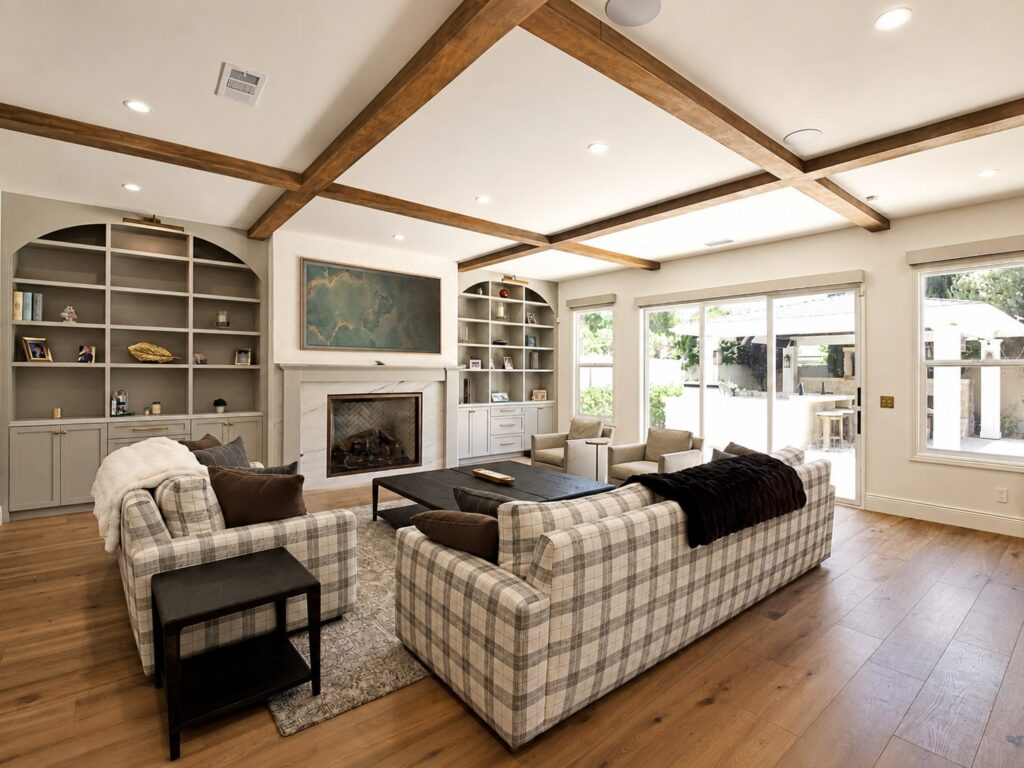
SB Construction & Remodeling can discuss your existing home, proposed scope, and daily needs so occupancy questions are part of planning from the start. Explore our Zelzah Avenue whole-home renovation for an example of completed SB work; it does not establish whether that household stayed on site during construction.
Tell us about your remodel, including which rooms need to remain usable and any timing constraints. A clear conversation now can prevent an uncomfortable surprise once the work begins.