
A remodel handover should leave you with more than a finished-looking room. Review the agreed scope with your contractor, record unresolved items clearly, collect the relevant project documents and confirm who will handle follow-up. A homeowner walkthrough helps organize those conversations; it does not replace required inspections or a qualified professional’s assessment.
The most useful remodel punch list is specific enough that someone who missed the walkthrough can understand it. Instead of writing “kitchen unfinished,” identify the cabinet, describe what happens, attach a photo and record the agreed next step.
For Los Angeles homeowners, closeout details depend on the project, contract and permitting jurisdiction. Use this guide to prepare a practical discussion, not as proof that every concealed system is correct.
What Should a Remodel Handover Confirm?
A useful handover connects four activities that are related but not interchangeable:
- Homeowner walkthrough: review the completed scope, visible finishes and ordinary operation with the project team.
- Required inspections: obtain the applicable agency reviews and approvals for permitted work.
- Punch list: record specific incomplete items or concerns, agreed actions and follow-up.
- Handover: transfer the relevant records, operating information and maintenance guidance to the homeowner.
A room can look ready while a document or correction remains outstanding. Conversely, a finish concern does not automatically tell you the status of a permit. Keep those questions separate. For the broader sequence leading here, see our whole-home remodel timeline.
Bring the Scope and Approved Changes to the Walkthrough
Bring the signed scope, approved change orders, relevant drawings and final product selections. Compare the work to those records rather than a photo saved before the design changed. Have the person coordinating follow-up join the walkthrough, and agree where the shared list will be stored.
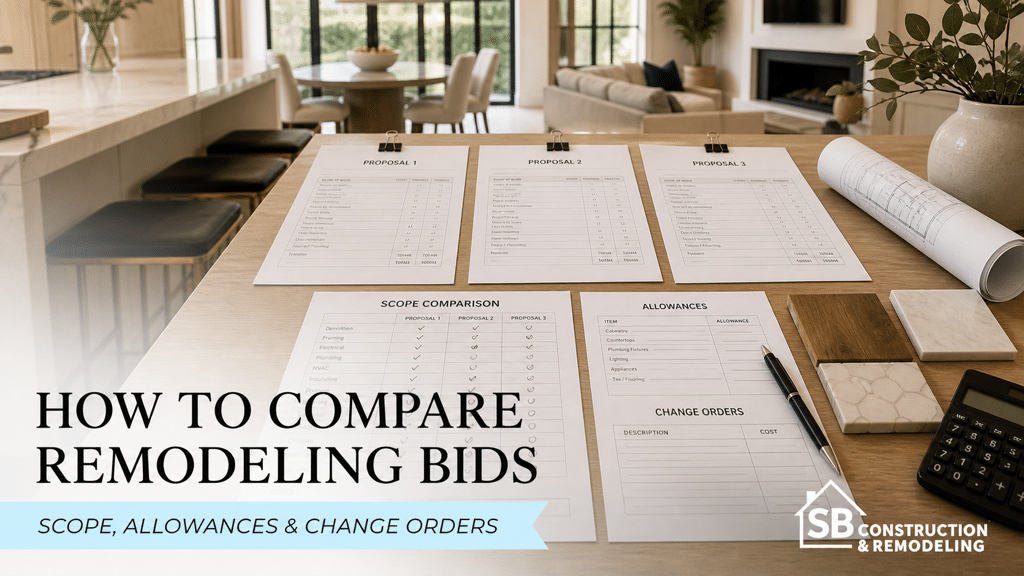
Check what was included, excluded or substituted. A missing agreed cabinet accessory and a newly requested accessory need different conversations. Our guide to comparing remodeling bids explains the scope distinctions that remain useful at closeout.
The California Contractors State License Board’s contract guidance emphasizes clear written terms and written change orders. Keep the final version of each approved change with the project records so everyone reviews the same expectations.
Review Each Room by Function, Then Finish
Follow the same route through every remodeled room. First ask for normal-use demonstrations; then review visible finishes in ordinary lighting. Photograph an overall view and a close-up when you record a concern.
Cabinets, Doors and Everyday Controls
- Open and close cabinet doors and drawers normally; note rubbing, missing hardware or an adjustment to discuss.
- Ask the contractor to demonstrate newly installed windows, doors, locks and any unfamiliar controls.
- Review the operation and care of installed appliances according to their manuals.
- Ask how lighting controls, ventilation and relevant shutoffs work, and who to contact with questions.
Do not force a sticking component or conduct improvised performance tests. Do not open electrical equipment, climb onto roofs or dismantle finishes to inspect concealed work. Have the appropriate qualified professional assess suspected system or safety problems.
Visible Finishes and Cleanup
Review the agreed paint, tile, countertops, flooring, trim and fixtures. Identify the exact surface and condition instead of calling the whole room defective. Discuss cleaning residue separately from damage, and compare material appearance with the approved selection and applicable product information.
Check whether the agreed cleanup, debris removal and protection removal are complete. Ask about curing times or restrictions before moving furniture, scrubbing surfaces or using newly finished areas. A generic checklist cannot determine whether a specific installation meets its technical requirements.
Build One Punch List People Can Act On
A shared document is easier to follow than separate texts, sticky notes and verbal reminders. Give every observation an item number. The following is an illustrative entry, not a record of an SB project or a promised repair schedule:
- Item and location: K-01, kitchen, upper cabinet immediately left of the refrigerator.
- Observation: door rubs the neighboring door during normal opening.
- Evidence: dated overview photo and short demonstration video.
- Agreed action: project team to assess and confirm the appropriate adjustment.
- Owner and timing: named coordinator; target visit date to be agreed.
- Status: open, awaiting material, ready for review or verified complete.
- Verification: date reviewed and a note confirming the outcome.
Keep the observation separate from the proposed remedy. Describe what you can see without diagnosing hidden causes. If the team disagrees about an item, record that it remains unresolved rather than marking it complete. Keep previous versions so the history is understandable.
Separate Corrections From New Requests
During the walkthrough, you may notice something unfinished, question an agreed detail or decide you want an upgrade. Ask the team to classify the request against the signed scope. A change in preference is not automatically a correction included in the original price.
Where new work is proposed, clarify scope, cost and timing through the appropriate written change process. Where responsibility is disputed, document both positions and obtain qualified advice if needed. The punch list organizes the discussion; it does not settle legal responsibility.
Collect a Usable Handover Folder
Request the documents relevant to your actual project and note any missing record with a follow-up owner:
- Final scope and approved changes.
- Applicable permit numbers, inspection records and required closeout approvals.
- Product names, model numbers, operating manuals and registration information.
- Written contractor and manufacturer warranties, where offered, including claim contacts.
- Maintenance instructions, care products and finish or paint codes.
- The current punch list, remaining appointments and primary follow-up contact.
The Los Angeles Department of Building and Safety provides inspection and property-record resources for City of Los Angeles projects. Other cities and unincorporated areas use their responsible agencies. Ask the project team to explain the actual record status; a permit being issued is not the same as every required inspection being approved. Our remodeling permits and inspections guide provides more context.
For future cleaning, repairs or replacements, keep the exact product information with your material-selection records. Do not assume different products share the same maintenance or warranty terms.
Confirm Follow-Up and Closeout in Writing
Before ending the meeting, confirm who will send the updated list, arrange access and review completed items. Set realistic dates around required trades and materials rather than assuming every item can be resolved in one visit.
Review payment and completion paperwork against your contract and applicable requirements. Do not sign a statement you do not understand or that inaccurately describes the work. Keep payment records and seek qualified advice about disputed balances, releases or legal rights; this guide does not prescribe a universal withholding percentage or replace legal advice.
Remodel Handover Questions
Is a Final Walkthrough the Same as a Final Inspection?
No. A homeowner walkthrough reviews scope, use and observations with the project team. Required inspections are a separate agency process. Confirm both the practical handover and the approvals applicable to your project.
How Long Should a Punch List Take?
There is no single reliable duration. An adjustment, replacement part and trade-specific correction have different dependencies. Ask for an owner, target date and update process for each item.
What If a Concern Appears After Handover?
Document when you noticed it, take clear photos and contact the appropriate project or warranty contact promptly. Follow written care instructions. Treat urgent safety concerns separately from routine finish follow-up.
Which Records Should I Keep?
Keep the contract, approved changes, applicable permits and inspection records, payment records, warranties, manuals and punch-list history together. Preserve copies you can access independently of a temporary project link.
Plan for a Clear Finish From the Start
Closeout expectations belong in the remodeling conversation before construction begins. If you are planning a kitchen, bathroom or broader home remodel, contact SB Remodeling to discuss the scope, project coordination and handover questions that matter to your household.