In the Pacific region, a midrange minor kitchen remodel benchmarked at about $29,728 in the latest 2025 Cost vs. Value Report, which tells you one important thing right away: kitchen budgets can move fast, and they do not always move in a straight line.
In Los Angeles, cost per square foot is still a useful starting point, but it is only a starting point. The real budget is shaped by scope, permitting, finish level, and whether your remodel stays cosmetic or turns into a full rework of plumbing, electrical, cabinetry, and layout.
At SB Remodeling, we believe homeowners deserve current, local, and practical guidance, which is why this article breaks down what kitchen remodel cost per square foot in Los Angeles really means in 2026, where the money actually goes, and how to budget more confidently before construction begins.
Quick Answer: What “Kitchen Remodel Cost per Square Foot” Means in LA
If you are searching for kitchen remodel cost per square foot Los Angeles homeowners can actually use, the most honest answer is this: square-foot pricing helps with rough planning, but scope drives the final number.
For 2026 Los Angeles budgeting, many homeowners fall into ranges like these:
- Cosmetic or light remodel: about $250 to $400 per square foot
- Mid-range full remodel: about $400 to $700 per square foot
- High-end, custom, or layout-changing remodel: about $700 to $1,100+ per square foot
That means a 100-square-foot kitchen might land around $25,000 to $40,000 for a lighter refresh, while a 200-square-foot kitchen with custom cabinets, premium appliances, and layout changes can push well into the six figures. This is why “average kitchen remodel cost per square foot” can be misleading on its own. Two kitchens with the same footprint can end up tens of thousands of dollars apart depending on what stays, what moves, and what gets upgraded to current code.
A better way to use cost per square foot is to treat it as a screening tool, not a final price. It helps you answer the first budgeting question: are you planning a refresh, a true remodel, or a custom rebuild? Once that is clear, the numbers get much more useful.
Why LA Kitchen Remodel Prices Vary So Much
Cabinets usually set the tone for the whole budget
In most kitchens, cabinets are the biggest line item or very close to it. That is because cabinetry is not just about boxes and doors. It includes design, material quality, hardware, storage accessories, installation precision, fillers, trim, and often the visual identity of the whole room.
Here is the practical breakdown:
- Stock cabinets are the budget-friendliest option, but they offer the least flexibility.
- Semi-custom cabinets usually hit the sweet spot for many Los Angeles homeowners because they allow better sizing, more finish options, and a more tailored look without going fully bespoke.
- Custom cabinets make sense when the layout is unusual, storage needs are highly specific, or the design goal is elevated enough that standard dimensions will feel compromised.
If your cabinet boxes are in good shape and your layout works, keeping them and updating fronts, hardware, and finishes can reduce cost substantially. That is one of the clearest ways to lower kitchen remodel cost LA homeowners often overlook.
Countertops, backsplash, and appliances can swing the number fast
After cabinetry, finishes and appliances are where the budget can widen dramatically. A kitchen with straightforward quartz counters, a simple tile backsplash, and a standard appliance package lives in a very different pricing lane than one with waterfall-edge slabs, full-height stone, panel-ready refrigeration, and a professional range.
This is where homeowners often underbudget because the upgrades feel incremental while shopping. A nicer faucet here, better hood there, upgraded appliance package after that. On paper they look like isolated decisions. In practice, they stack quickly.
As a rule:
- Standard appliance packages keep the budget steadier.
- Built-in and pro-style appliances raise not only appliance cost, but often installation, ventilation, cabinetry, and electrical needs.
- Full-height slab backsplashes and specialty stone fabrication can push both material and labor upward.
That is why kitchen renovation cost Los Angeles projects should always be estimated by scope plus selections, not just by room size.
Plumbing, electrical, and layout changes are where budgets jump
The fastest way for a mid-range project to become a high-range project is to start moving things. Keeping the sink, range, and major appliances in roughly the same locations usually protects your budget. Once you begin relocating plumbing lines, adjusting gas service, reworking lighting plans, or opening walls, the cost curve changes.
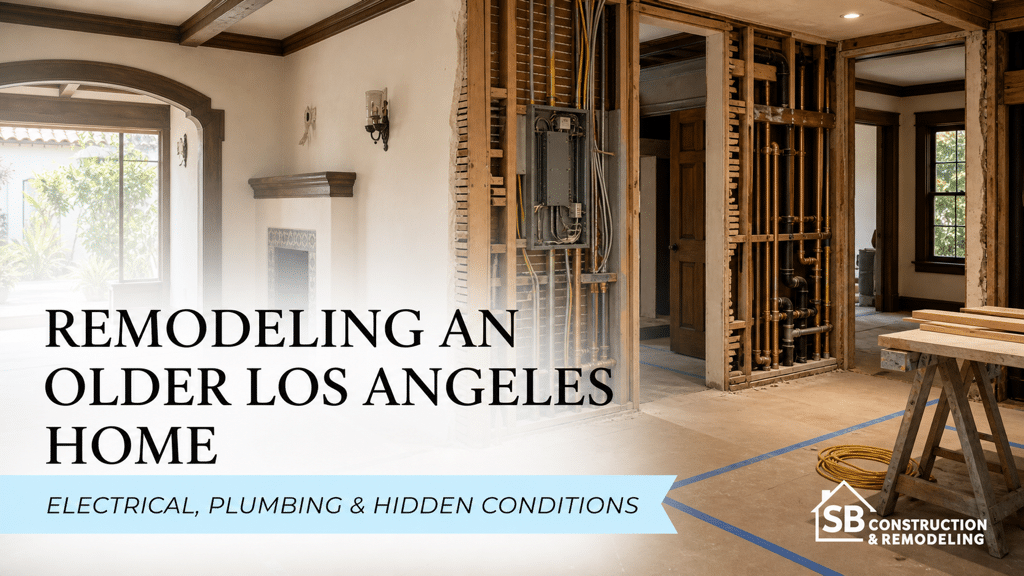
Electrical work is especially important in older Los Angeles homes. Older kitchens often need more than new pendant lights and under-cabinet lighting. They may need circuit work, panel coordination, outlet updates, or code-driven changes tied to the remodel itself. The same is true for plumbing if walls open and aging lines or hidden conditions are discovered.
And if the remodel becomes an open-concept kitchen project or requires structural changes, cost can rise quickly because you may be adding engineering, framing, patching, and a more complex permit path.
Permits, Codes, and Timeline in Los Angeles in 2026
A kitchen remodel in Los Angeles is not just a design project. It is also a permitting and sequencing project. For many homeowners, this is where the biggest planning mistakes happen.
The Los Angeles Department of Building and Safety makes an important distinction between simpler work and more complex work. Some residential kitchen remodels with no structural changes may qualify for an Express Permit. Once you introduce more complexity, a plan check process may be required through LADBS.
That matters for both budget and timeline.
In 2026, permit planning is also tied to the current 2025 California Building Standards Code cycle, which took effect on January 1, 2026. In plain English, that means your remodel is being reviewed in a current code environment, and electrical, lighting, and energy-related requirements may affect what needs to be upgraded once the work is opened up. The California Energy Commission also continues to shape lighting and control requirements that can affect kitchen scope.
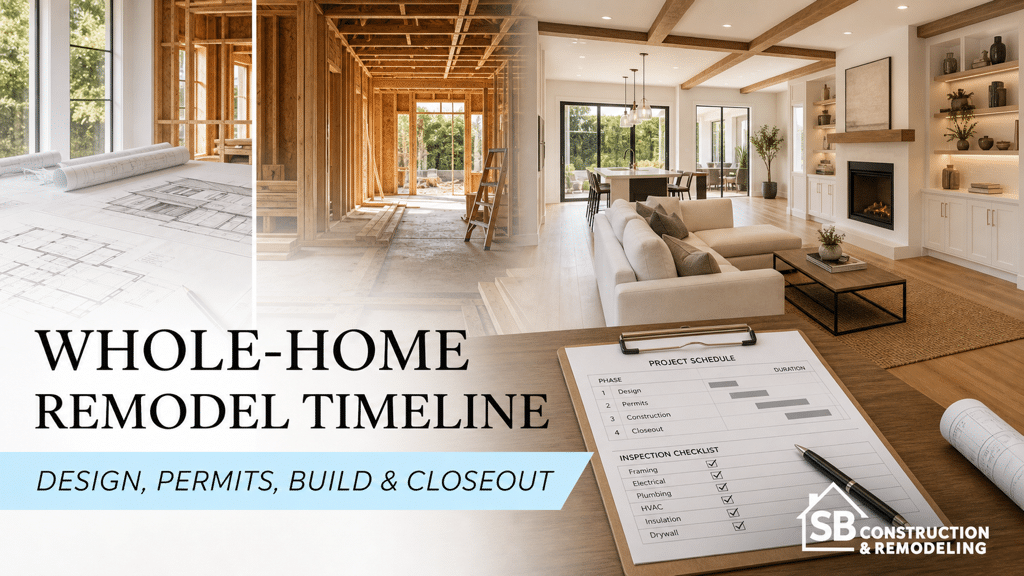
From a scheduling standpoint, many Los Angeles kitchen remodels are multi-phase, multi-month projects when you count everything:
- design development and scope confirmation
- permit strategy
- material selections and ordering
- demolition and rough work
- cabinets, counters, tile, and finishes
- punch list and final details
The construction phase itself may be shorter than homeowners think. What often takes longer is pre-construction decision-making, ordering, and approvals. Custom cabinetry, specialty appliances, and structural review can all extend a project before demo even starts.
If you are early in planning, it helps to schedule a virtual consultation before locking yourself into a budget number that was built from internet averages instead of a real scope.
How to Build a Smarter Budget Without Sacrificing the Result
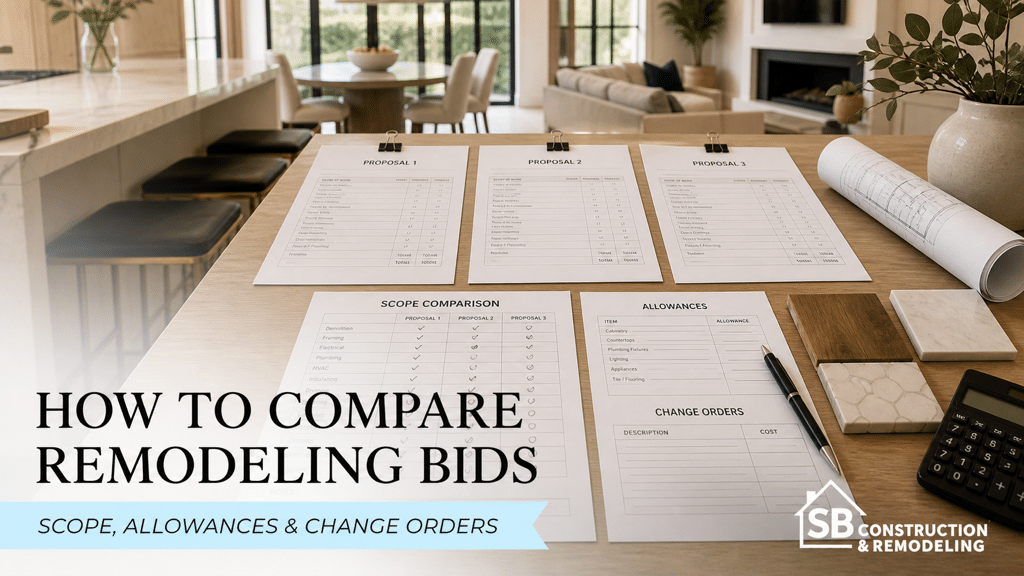
The best kitchen remodel estimate Los Angeles homeowners can get is one that is detailed enough to prevent surprises before work begins. That means your bid should not just show a lump sum. It should clearly define what is included, what is an allowance, and what could change.
A strong bid usually includes:
- a written scope of work
- cabinetry level and layout assumptions
- countertop and backsplash allowances
- appliance installation assumptions
- plumbing and electrical scope
- permit responsibility
- exclusions and contingency language
This is where many “cheap” estimates stop looking cheap. If one contractor excludes permit coordination, electrical revisions, finish-level details, patching, or haul-away, that lower number may not reflect the real project cost.
There are also several smart ways to lower cost per square foot without lowering the quality of the finished kitchen:
- keep plumbing and gas in place when possible
- avoid structural changes unless the layout gain is truly worth it
- choose semi-custom instead of full custom when sizing allows
- use one hero material and keep surrounding finishes more restrained
- rework cabinetry strategically instead of replacing everything by default
- finalize selections early so substitutions and rush orders do not inflate the build
For homeowners thinking beyond one room, financing strategy also matters. If your kitchen remodel is part of a broader property plan, including a future ADU or larger renovation phase, these SB Remodeling resources may help you think more holistically: Los Angeles ADU financing options in 2026 and this ADU building guide covering costs, permits, and builder considerations.
And when you are ready to compare your ideas against real project conditions, the easiest next step is to contact SB Remodeling.
Resale and “Value Added” Basics
A kitchen remodel can absolutely improve resale appeal, but not every dollar spent returns equally. Buyers usually notice the big visual and functional wins first: cabinetry, countertops, lighting, flow, storage, and whether the kitchen feels clean, current, and cohesive.
That is why the smartest value-added remodel is not always the most expensive one. Often, it is the project with the clearest priorities. A well-designed mid-range kitchen with strong cabinetry choices, good lighting, quality counters, and a layout that works can outperform a more expensive remodel that overspends in the wrong places.
If resale matters, focus on durability, consistency, and everyday function. If this is your long-term home, prioritize how you actually live in the space. The best kitchen remodel budget is the one that fits both your property and your real goals.
Takeaway
A realistic 2026 kitchen remodel budget in Los Angeles starts with scope, not a square-foot number. Cost per square foot is helpful for rough planning, but the real pricing drivers are cabinets, finish level, utility changes, permit path, and how far the remodel moves beyond the existing layout. The homeowners who budget best are usually the ones who define the project clearly, choose materials early, and get a detailed bid before the walls open.